Monetization Magic

Colorado Website Development

  • Home
    • Blog
  • Business Coaching
    • Action Strategy Session
    • Coaching Call Prep Form
    • Monetization Mastermind Table
    • Platinum Inner Circle
  • Services
    • Back Up and Website Maintenance
    • Hosting
  • Done For You
    • Small Business Quick Start
    • Website Development
      • Website Portfolio
      • Our Process
    • Advertising Maintenance
    • Video Web Commercials
      • Video Portfolio
  • About
  • Coaching Call Prep Form
  • Free Resources
  • Upcoming Classes
  • Media
  • Contact

Steve Jobs changes the face of WordPress

By SoftwareGirl

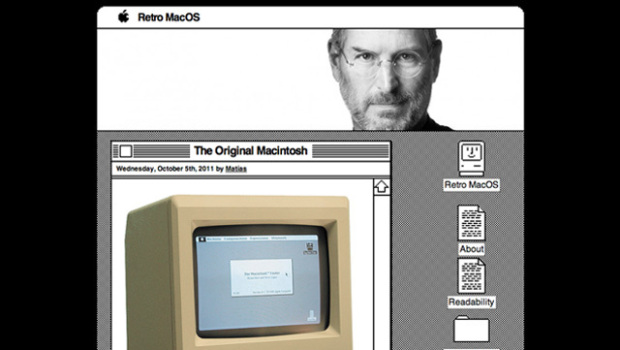
Matthew Mullenweg has revealed a new theme dedicated to Steve Jobs.  The WordPress team posted the Retro MacOS theme for fans of the old operating system. Mac OS icons will serve as links and post will live in windows. Aww.  Giving credit where credit is due, this actually originated with the website Boing Boing.  It looks like the original Macintosh interface in that it is black and white with clunky images.  It is configurable so if you still happen to need your company name in the header, it is possible to put that in for yourself.


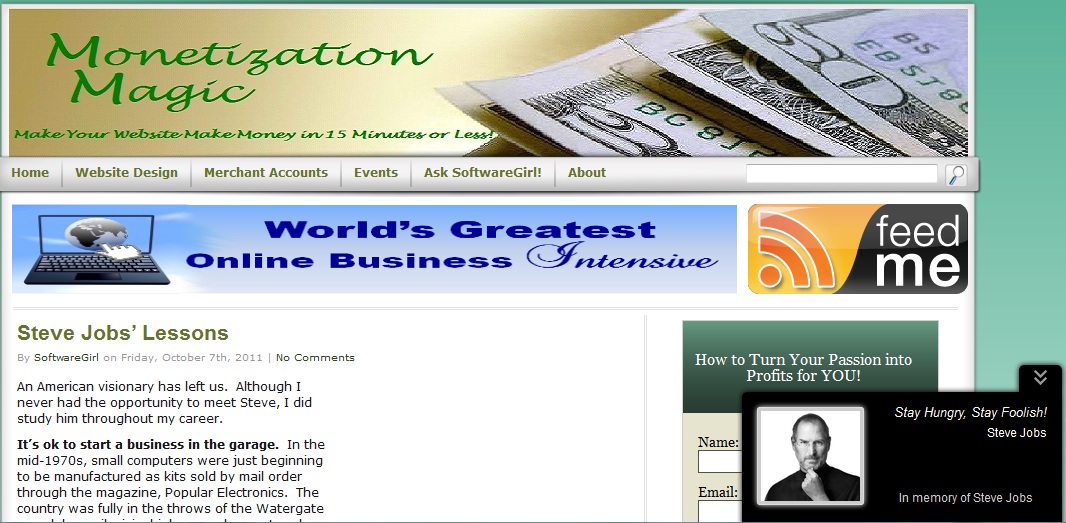
Steve Jobs is inspiring new plugins even after his passing.  The latest from Ivan Churkov is a pop up which reveals a picture of Steve Jobs with his famous quote “Stay Hungry, Stay Foolish”.


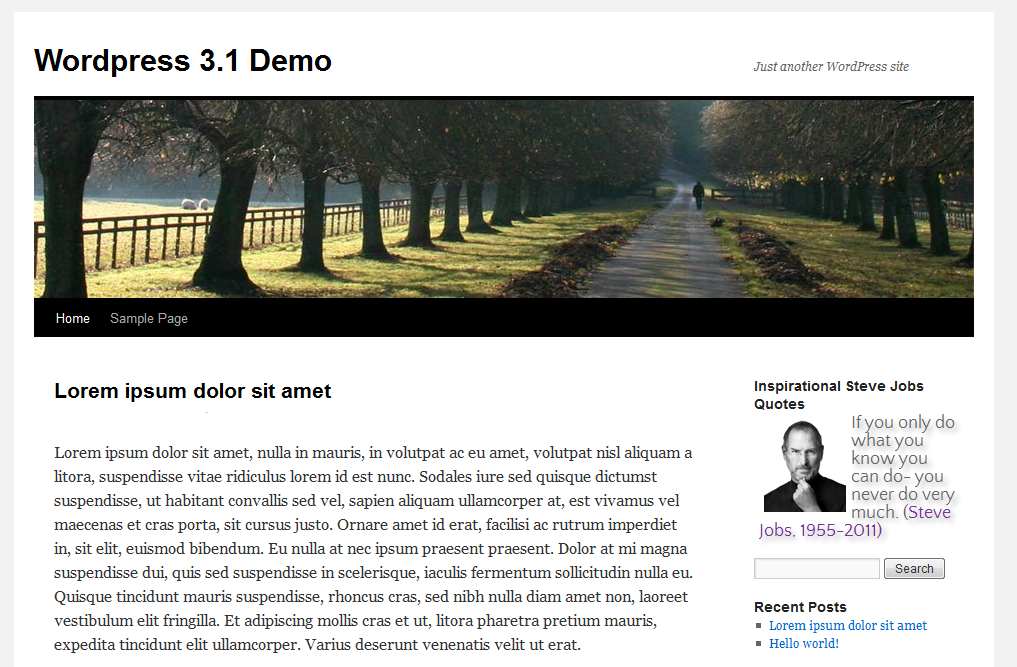
If you’d prefer an inspirational quote from Steve on your sidebar, there’s a widget for that too! This one is called appropriately Inspirational Steve Jobs Quotes.    There are two different styles for this one.  The styles vary the font from a script font to a somewhat straighter aerial font.


If you are so inclined to memorialize Steve on your blog, you can use some of these options to do so.  Steve Jobs’ was reportedly a very private individual and judging from what I’ve read about him, I think he’d be happier if we all just followed our passions and invented something great to serve the greater good of mankind.

http://wordpress.org/extend/plugins/inspirational-steve-jobs-quotes/screenshots/

Enhanced by Zemanta

Filed Under: Technology Tagged With: Apple, Boing Boing, Mac OS, Macintosh 128K, Matt Mullenweg, Steve Jobs, WordPress

Steve Jobs’ Lessons

By SoftwareGirl

An American visionary has left us.  Although I never had the opportunity to meet Steve, I did study him throughout my career.

It’s ok to start a business in the garage.  In the mid-1970s, small computers were just beginning to be manufactured as kits sold by mail order through the magazine, Popular Electronics.  The country was fully in the throws of the Watergate scandal, an oil crisis, high unemployment and inflation while exiting the Vietnam war.

It is observed that during times of high unemployment that Americans become very creative and spur the economy by what they create.  As a result, companies such as Hewlett-Packard grew out of World War II, Apple and Microsoft grew out of the 1970s.  They didn’t wait for their government to bail them out.

You can be successful even if you drop out of college.  He quit going to his regular classes 6 months after beginning college.  It took him another 18 months to finally officially drop out of college.  During that time he decided to drop into classes that interested him.  One of those classes was a calligraphy class which he thoroughly enjoyed and led to the original fonts that Apple used which set them apart from the personal computer.

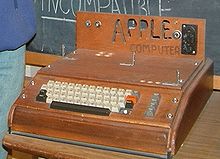
Pursue your passion.  Steve enjoyed creating things beginning with the Apple I which grew from his garage.  The Apple I went on sale in July 1976.

The Apple I, Apple's first product, was sold as an assembled circuit board and lacked basic features such as a keyboard, monitor, and case. The owner of this unit added a keyboard and a wooden case.

A rolling stone gathers no moss.  Although the Apple I was somewhat of a success, they didn’t stop there.  The Apple II was introduced on April 16, 1977 and introduced an open architecture and color graphics.  Not all of Apple’s products were a success; however, those that weren’t often became the embryo for a later product that was a resounding success.  The lesson learned here is that even if you do something initially that is not a success, use that to create something even better.

Produce quality products.  While Apple Computers early products , based on a superior hardware platform, did not contain the “basic features” such as the keyboard, monitor and a case, what they did produce was a quality product.  During the early years of microcomputers, there was no such thing as a basic feature set.  Everything was sold as separate parts.

Pick your niche.  Apple Computer sold their systems primarily to the school systems with proprietary software which did not work on a regular personal computer.  Their price point was often double of what a personal computer would run.  They focused on the user experience.  They continually reinvented themselves largely due to Steve’s vision.

Use your setbacks as the launch pad for something really great.  Jobs delegated even his CEO duties to a business man so that he could spend time creating.  That same business man relieved Jobs of his job in the company that he founded.  The setback allowed him the time to reflect and discover that he really did have a passion for what he did.  Although he felt like a failure, he went on to create two other companies within the same year.  One company known as Next, Inc. may have very been the first time that someone facing adversity publicly simply said “Next” and moved forward.  The innovative object-oriented Nextstep operating system and development environment were highly influential.  NeXT also developed WebObjects, one of the first enterprise web application frameworks. WebObjects never became very popular because of its initial high price of $50,000 but remains a prominent early example of a web server based on dynamic page generation rather than static content. The other company was born from an even bigger idea as he bought George Lucas’ computer-graphics division in 1986.  This company was called Pixar, and the path to a pair of “Toy Story” friends was laid.   Although Steve Jobs created Pixar, he always considered it to be a hobby.

Apple acquired NeXT in 1996.  The main purpose of the acquisition was to use NeXTSTEP as a foundation to replace the dated Mac OS. 

Leverage.  Although Jobs did not receive any monetary rewards when Apple purchased NeXT, that didn’t stop him.  He returned Apple to profitability.  Using his experience with Apple, NeXT and Pixar, he went on to create wonderful consumer electronics such as the iPod, iPad, and iPhone.

Be the best…and let others know it.  What Steve knew was what his products were and what the competition offered.  He knew the pros and cons of both sides of the fence.  He used his knowledge of both to portray his products in a positive light.  He knew when something was not up to his standard and he would directly inform his employees of the lack when he saw it (usually by firing them on the spot).  He believed in himself and let others know about it.

While Steve Jobs was definitely a visionary and many are extolling great things about him due to his recent passing, he wasn’t always sunshine and roses to be around.  He was a multifaceted perfectionist who definitely marched to the beat of a different drummer.  He was known to reduce people to tears.  He could be both charming and brutal sometimes in the same sentence.  There is currently no one like Steve Jobs in his market and I strongly doubt we will ever see another like him.  He is a legend and has left us with an awesome legacy.


Enhanced by Zemanta

Filed Under: Technology Tagged With: Apple, Apple Computer, Hewlett-Packard, NeXT, Popular Electronics, Steve Jobs, United States, WebObjects

Copyright © 2026 · Powered by Monetization Magic · Log in